
Nav Bharat Jagriti Kendra
Nav Bharat Jagriti Kendra
NBJK Organizes Staff Orientation and Capacity Building Training under SBI Sanjeevani Clinic on Wheels Project
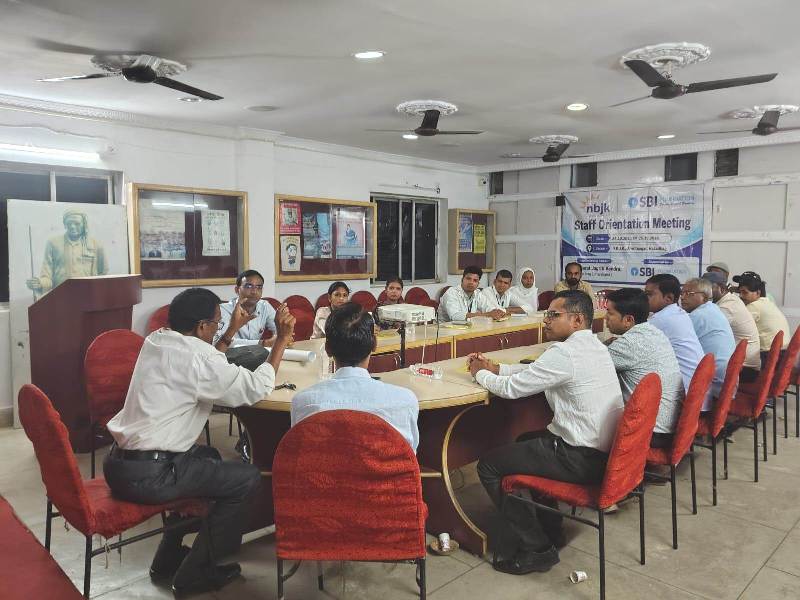 26 Octobber 2026, Hazaribagh: Nav Bharat Jagriti Kendra (NBJK), with support from SBI Foundation, organized a two-day Staff Orientation and Capacity Building Training on 24–25 October 2026 at its Coordination Office in Amrit Nagar, Hazaribagh. The training aimed to strengthen the knowledge, teamwork and field-level coordination of medical teams working under the SBI Sanjeevani Clinic on Wheels project in Chatra, Godda and Pakur districts.
Participants included programme coordinators, doctors, pharmacists, laboratory technicians, nurses and drivers associated with the mobile medical units in all three districts.
Mr. Adhin Mahto served as the resource person and conducted sessions on team building, effective communication, coordination and conflict resolution. Other key topics included preventive and curative healthcare, strengthening health sub-centres, and coordination with ASHAs, ANMs, Anganwadi workers, Gram Panchayats and Village Health, Sanitation and Nutrition Committees (VHSNCs).
On the second day, Mr. Mahto discussed the roles and responsibilities of project staff and community stakeholders. He also covered village-level planning, awareness campaigns, health camps, referrals, community mobilization, household visits, monitoring, documentation and reporting. The sessions emphasized coordinated efforts to improve healthcare delivery and community participation in underserved areas.
Mr. Shailesh Kumar, District Project Manager, Chatra, coordinated the training under the guidance of Mr. Anand Abhinav, Programme Director.
The SBI Sanjeevani Clinic on Wheels project delivers primary healthcare services to 60 remote and underserved villages, with 20 villages each in Chatra, Godda and Pakur districts. The project covers Kunda and Lawalong blocks in Chatra, Poraiyahat in Godda, and Pakuriya in Pakur. Through its mobile medical units, the initiative seeks to improve access to essential healthcare in communities where quality medical facilities have traditionally been difficult to reach and residents have often depended on distant or inadequately equipped health centres.
The training reinforced the importance of teamwork, community engagement and effective coordination in ensuring accessible and responsive healthcare services for rural populations.